All Categories
Featured
9 Easy Facts About What to Watch For When Researching Deb...
The Basic Principles Of Monetary Consequences the Cost of...
Some Known Details About Navigating Debt Forgiveness and ...

Unsecured Debt Relief Explained Things To Know Before You...
Some Known Details About Navigating Debt Forgiveness and What You Need to Know
Table of Contents
That liberates money in the brief term, and you might have three to 4 years to save toward the settlement amount. Extremely harmful to credit history, primarily as a result of missed repayments and a negative "worked out" mark that can stay on your debt record for as much as 7 yearsMay be only alternative if various other alternatives (financial obligation combination, balance transfer charge card, debt mercy) aren't possibleTypically requires a cost to the 3rd party, which might balance out some or all of the cost savings from debt settlementMay aid you avoid insolvency if you have actually missed several paymentsNot all financial institutions deal with financial debt settlement companies Debt forgiveness might be best for you if you are experiencing a monetary hardship that makes it nearly impossible to pay down your financial obligation equilibriums.
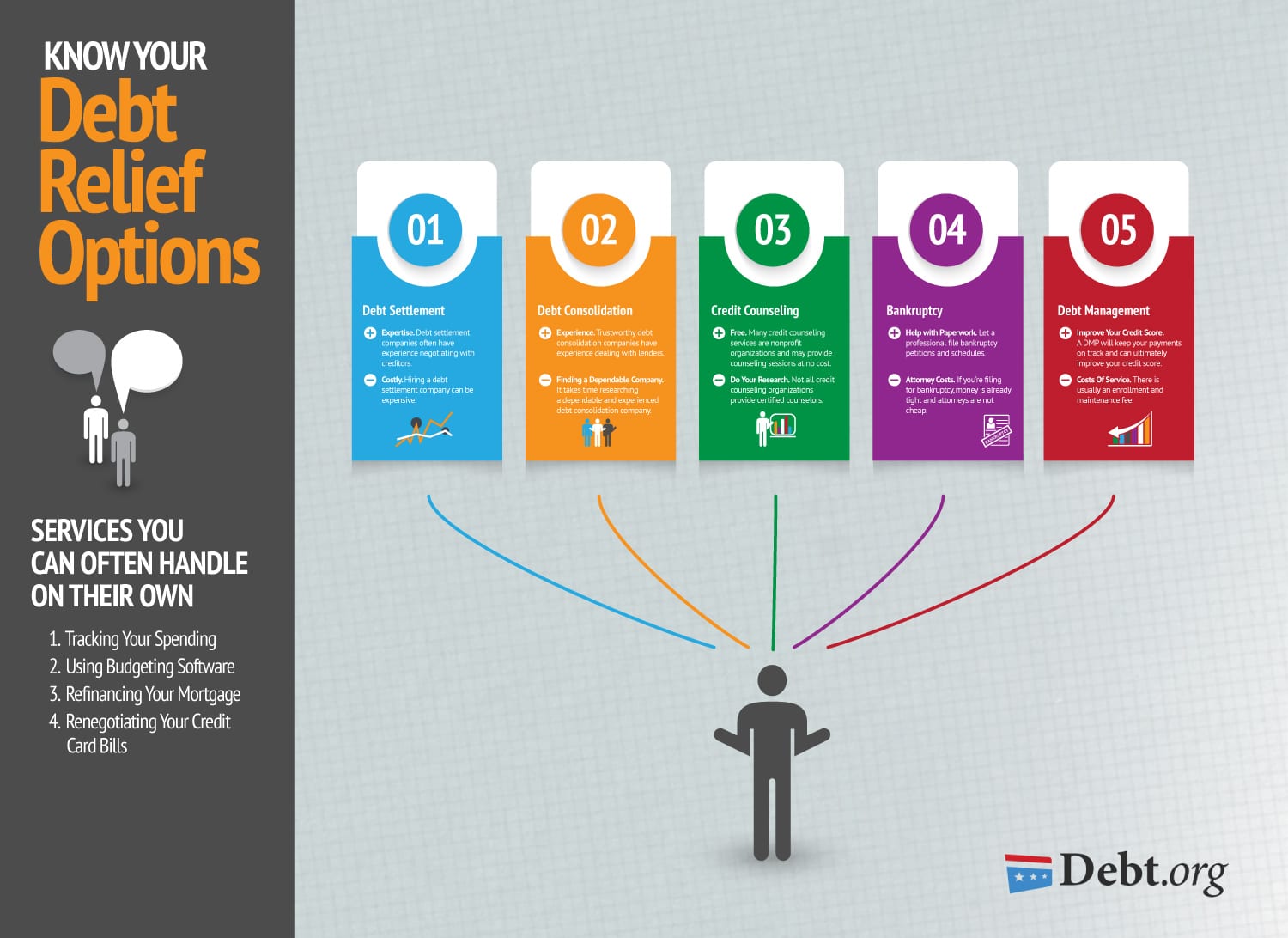
With a DMP, you make one regular monthly repayment to the credit rating therapy company. Those funds are after that distributed to financial institutions of your unprotected financial obligations, such as charge card and installment loans. The firm deals with your lenders to minimize rate of interest or forgo costs, but some lenders might decline such giving ins.
A financial debt loan consolidation lending combines your eligible debts into one brand-new car loan. It can assist you pay for financial debt if you're able to protect a lending rate that's less than the average price of the accounts you're settling. Nonetheless, you have to avoid racking up financial debt on those recently cleared accounts or your financial debt can grow even greater.
These cards often use a 0% interest introductory period of up to 21 months. That gives you plenty of time to get rid of or considerably decrease your balance while making interest-free repayments. For some individuals facing insurmountable debt, bankruptcy might be the only way to stop collection proceedings and legally solve their financial debts.
Not known Factual Statements About ROI vs Self-Guided Options
You might require it if your lender or a collection company ever before tries to collect on the financial debt in the future. When a lender forgives $600 or more, they are called for to send you Kind 1099-C.
Debt forgiveness or negotiation often harms your credit score. Anytime you settle a financial obligation for much less than you owe, it might appear as "settled" on your credit rating report and impact your credit rating for seven years from the day of settlement. Your credit rating can also go down significantly in the months resulting in the forgiveness if you fall behind on payments.
The Facts About How APFSC Work with Families Uncovered
This scenario typically results from underreporting earnings, not filing returns on time, or discrepancies discovered throughout an Internal revenue service audit. The consequences of gathering tax financial debt are serious and can consist of tax liens, which provide the Internal revenue service a legal insurance claim to your residential property as safety for the financial obligation.
Salaries and Financial institution Accounts Internal revenue service can impose (seize) earnings and financial institution accounts to satisfy the financial obligation. Property Seizure In extreme situations, the Internal revenue service can seize and market property to cover the financial debt.
Social Preconception Encountering lawful action from the IRS can carry social stigma. Employment Opportunities A poor credit report rating due to strain debt can restrict employment possibilities. Government Advantages Tax financial obligation might impact eligibility for government advantages, such as Social Safety and Medicaid.
Little Known Questions About Knowing the Cost of Bankruptcy Counseling.
The OIC takes into consideration numerous variables, including the taxpayer's earnings, expenses, property equity, and capability to pay. Efficiently working out an OIC can be intricate, calling for a thorough understanding of the IRS's standards and a solid disagreement for why your deal lines up with your ability to pay. It is essential to keep in mind that not all applications are accepted, and the procedure calls for thorough economic disclosure.
The IRS evaluates your overall financial scenario, including your revenue, expenditures, possession equity, and ability to pay. You must also be existing with all filing and repayment needs and not be in an open insolvency case. The IRS additionally considers your compliance history, assessing whether you have a record of timely filing and paying taxes in previous years.
All About Resources Available for Your Fee Waivers and Discounts for Bankruptcy Counseling: Who Qualifies? Journey
The application process for an Offer in Compromise entails several thorough actions. First, you need to complete and submit IRS Form 656, the Offer in Concession application, and Form 433-A (OIC), a collection information statement for individuals. These forms require thorough financial details, including information about your income, financial obligations, expenditures, and possessions.
Back taxes, which are overdue tax obligations from previous years, can substantially increase your overall IRS financial obligation otherwise resolved without delay. This financial debt can accrue passion and late payment fines, making the original quantity owed much larger gradually. Failure to repay tax obligations can cause the internal revenue service taking enforcement activities, such as releasing a tax obligation lien or levy versus your home.
It is necessary to address back taxes as soon as feasible, either by paying the total owed or by organizing a layaway plan with the internal revenue service. By taking aggressive actions, you can avoid the build-up of additional interest and penalties, and avoid a lot more aggressive collection actions by the IRS.
One common reason is the idea that the taxpayer can pay the sum total either as a round figure or through a layaway plan. The internal revenue service likewise takes into consideration the taxpayer's earnings, expenses, property equity, and future earning potential. If these variables show that the taxpayer can pay for to pay greater than the used amount, the internal revenue service is likely to decline the offer.
The 6-Minute Rule for What's Ahead for Fee Waivers and Discounts for Bankruptcy Counseling: Who Qualifies? and Debtor Protections
It is important to provide precise and total information in your application and to speak with a tax specialist to improve the chances of approval. Handling internal revenue service debt can be intricate and overwhelming. Tax specialists, such as CPAs, tax obligation lawyers, or registered representatives, can supply vital assistance. They have the competence to browse the details of tax obligation legislation and internal revenue service procedures.

Table of Contents
Latest Posts
9 Easy Facts About What to Watch For When Researching Debt Relief Services Described

The Basic Principles Of Monetary Consequences the Cost of Online vs Phone Credit Counseling: Which Format Is Right for You?
Some Known Details About Navigating Debt Forgiveness and What You Need to Know
More
Latest Posts
9 Easy Facts About What to Watch For When Researching Debt Relief Services Described
The Basic Principles Of Monetary Consequences the Cost of Online vs Phone Credit Counseling: Which Format Is Right for You?
Some Known Details About Navigating Debt Forgiveness and What You Need to Know